Category Archive: Uncategorized

Jose Manuel Gomez-Perez

Short bio

Jose Manuel Gomez-Perez is the Director of Language Technology Research at expert.ai. He works in the intersection of several areas of artificial intelligence, combining structured knowledge and neural models to enable machine understanding of unstructured data as an analogous process to human comprehension. Jose Manuel collaborates with organizations like the European Space Agency and has advised several tech startups. A former Marie Curie fellow, he holds a Ph.D. in Computer Science and Artificial Intelligence based on his work during project Halo, an initiative of Microsoft co-founder Paul Allen to create a Digital Aristotle for life and physical sciences.

He regularly publishes in areas of AI, natural language processing and knowledge graphs, and has given invited seminars at different universities in Europe and the USA. Recently, he published the book A Practical Guide to Hybrid Natural Language Processing. Magazines like Nature and Scientific American, as well as newspapers like El Pa?s have collected his views on AI, language and vision understanding, and their applications.


Talk abstract

Towards AI that Reasons with Scientific Text and Images

Reading a textbook in a particular discipline and being able to answer the questions at the end of each chapter is one of the grand challenges of artificial intelligence, which requires advances in language, vision, problem-solving, and learning theory. Such challenges are best illustrated in the scientific domain, where complex information is presented over a variety of modalities involving not only language but also visual information, like diagrams and figures.

In this talk, we will analyze the specific challenges entailed in understanding scientific documents and share some of the recent advances in the area that enable the development of AI systems capable to answer scientific questions. In addition, we will reflect on what new developments will be required to address the next grand challenge: to create an AI system that can make major scientific discoveries by itself.

Prof. Bolette Sandford Pedersen

Short bio

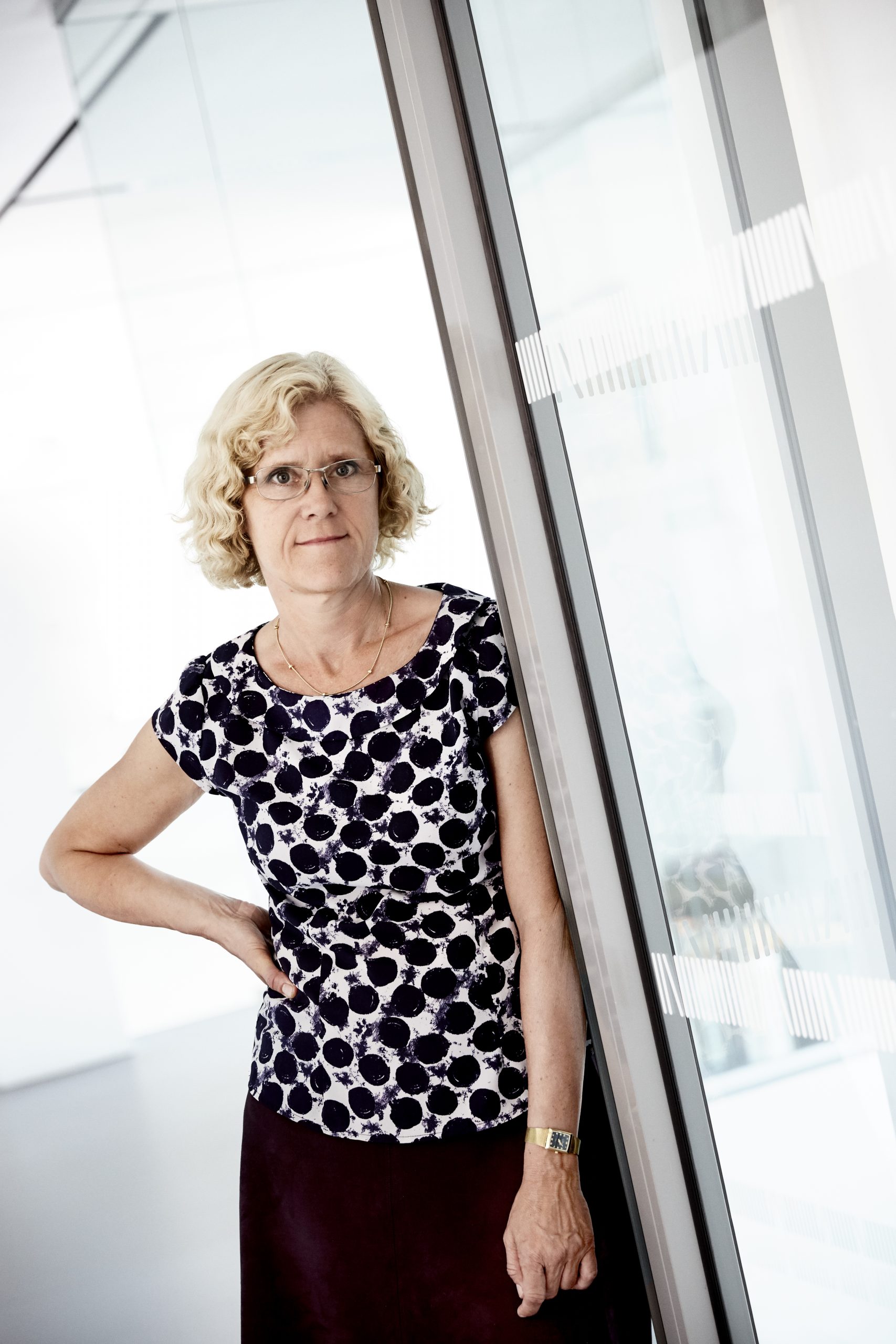
Bolette Sandford Pedersen is professor of computational linguistics, Deputy Head of the Department of Nordic Studies and Linguistics & Centre Leader of the Centre for Language Technology. Her main research interests include computational lexicography, lexical semantics and linguistic ontologies.

Bolette Sandford Pedersen was coordinator of the Nordic NORFA network SPINN on harmonisation of language resources in the Nordic countries, coordinator of the Danish Senseval2 participation on sense tagging, project manager of DanNet, package leader of lexical resources in DK-CLARIN (2008-2011), Danish coordinator of the EU project CLARA — Common Language Resources and their Applications — a Marie Curie Initial Training Network (2011-2014) and of the EU project META-NORD (2011-2013), project co-leader of the project Semantic Processing Across Domains financed by the Danish Research Council (2013-2016).

She has been member of selected scientific committees at ACL, COLING, the Global WordNet Conference, the Euralex Congress, LREC, OntoLex, among others.


Talk abstract

Lexical Conceptual Resources in the Era of Neural Language Models

Lexical conceptual resources in terms of e.g. wordnets, framenets, terminologies and ontologies have been compiled for many languages during the last decades in order to provide NLP systems with formally expressed information about the semantics of words and phrases, and about how they refer to the world. In most recent years, neural language models have become a game-changer in the NLP field – based, as they are, solely on text from large corpora. It is time we ask ourselves: What is the role of lexical conceptual resources in the era of neural language models? The claim of my talk is that they still play a crucial role since NLP systems based on textual distribution alone will always to some extent be insufficient and biased. Through my own work, which has over the years taken place in close collaboration with leading lexicographers in Denmark, I will illustrate how such conceptual resources can be compiled based on existing high-quality and continuously updated lexicographical resources and how they can be further curated by examining the distributional patterns captured in word embeddings.

Dr. Hristo Tanev (Joint Research Centre, EC, Italy)

Short bio

Hristo Tanev is a project officer and researcher at the Joint Research Centre of the European Commission. His research spans across various areas of computational linguistics and natural language processing, including event extraction, text classification, question answering, social media mining, lexical learning, language resources, and multilingualism.

He is a co-organizer of the Workshop on Challenges and Applications of Automated Extraction of Socio-political Events from Text. He has carried out research in three research institutions: University of Plovdiv Paisii Hilendarski (Bulgaria), ITC-irst (now Fondazione Bruno Kessler), Trento, Italy, and the Joint Research Centre of the European Commission, Ispra, Italy. He is among the founders of SIG SLAV (Special Interest Group of Slavic Language Processing) at ACL.


Demo abstract

Ontopopulis, a System for Learning Semantic Classes

Ontopopulis is a multilingual terminology learning system which implements several weakly supervised algorithms for terminology learning. The main algorithm in the system is a weakly supervised one which takes on its input a set of seed terms for a semantic category under consideration and an unannotated text corpus. The algorithm learns additional terms, which belong to this category. For example, for the category “environment disasters” in Bulgarian language the input seed set is: замърсяване на водите, изменение на климата, суша. The highest ranked new terms which the system learns for this semantic class are : опустиняване, обезлесяване, озонова дупка and so on.

In the demo session we are going to show how the system learns different semantic classes in Bulgarian and English.

Protected: MIC MM Object Detection Challenges 2022

This content is password protected. To view it please enter your password below:

Linguistic Intelligence: Computers vs. Humans (Abstract)

Prof. Dr. Ruslan Mitkov, University of Wolverhampton

Computers are ubiquitous – they are and are used everywhere. But how good are computers at understanding and producing natural languages (e.g. English or Bulgarian)? In other words, what is the level of their linguistic intelligence? This presentation will examine the linguistic intelligence of the computers and will look at the challenges ahead…

Read on

Prof. Ruslan Mitkov (University of Wolverhampton)

Short bio

Ruslan MitkovProf. Dr. Ruslan Mitkov has been working in Natural Language Processing (NLP), Computational Linguistics, Corpus Linguistics, Machine Translation, Translation Technology and related areas since the early 1980s. Whereas Prof. Mitkov is best known for his seminal contributions to the areas of anaphora resolution and automatic generation of multiple-choice tests, his extensively cited research (more than 240 publications including 14 books, 35 journal articles and 36 book chapters) also covers topics such as machine translation, translation memory and translation technology in general, bilingual term extraction, automatic identification of cognates and false friends, natural language generation, automatic summarisation, computer-aided language processing, centering, evaluation, corpus annotation, NLP-driven corpus-based study of translation universals, text simplification, NLP for people with language disabilities and computational phraseology.

Mitkov is author of the monograph Anaphora resolution (Longman) and Editor of the most successful Oxford University Press Handbook – The Oxford Handbook of Computational Linguistics. Current prestigious projects include his role as Executive Editor of the Journal of Natural Language Engineering published by Cambridge University Press and Editor-in-Chief of the Natural Language Processing book series of John Benjamins publishers. Dr. Mitkov is also working on the forthcoming Oxford Dictionary of Computational Linguistics (Oxford University Press, co-authored with Patrick Hanks) and the forthcoming second, substantially revised edition of the Oxford Handbook of Computational Linguistics.

Prof. Mitkov has been invited as a keynote speaker at a number of international conferences including conferences on translation and translation technology. He has acted as Programme Chair of various international conferences on Natural Language Processing (NLP), Machine Translation, Translation Technology, Translation Studies, Corpus Linguistics and Anaphora Resolution. He is asked on a regular basis to review for leading international funding bodies and organisations and to act as a referee for applications for Professorships both in North America and Europe. Ruslan Mitkov is regularly asked to review for leading journals, publishers and conferences and serve as a member of Programme Committees or Editorial Boards. Prof. Mitkov has been an external examiner of many doctoral theses and curricula in the UK and abroad, including Master’s programmes related to NLP, Translation and Translation Technology.

Dr. Mitkov has considerable external funding to his credit (more than є 20,000,000) and is currently acting as Principal Investigator of several large projects, some of which are funded by UK research councils, by the EC as well as by companies and users from the UK and USA. Ruslan Mitkov received his MSc from the Humboldt University in Berlin, his PhD from the Technical University in Dresden and worked as a Research Professor at the Institute of Mathematics, Bulgarian Academy of Sciences, Sofia.

Mitkov is Professor of Computational Linguistics and Language Engineering at the University of Wolverhampton which he joined in 1995 and where he set up the Research Group in Computational Linguistics. His Research Group has emerged as an internationally leading unit in applied Natural Language Processing and members of the group have won awards in different NLP/shared-task competitions. In addition to being Head of the Research Group in Computational Linguistics, Prof. Mitkov is also Director of the Research Institute in Information and Language Processing. The Research Institute consists of the Research Group in Computational Linguistics and the Research Group in Statistical Cybermetrics, which is another top performer internationally. Ruslan Mitkov is Vice President of ASLING, an international Association for promoting Language Technology. Dr. Mitkov is a Fellow of the Alexander von Humboldt Foundation, Germany and was invited as Distinguished Visiting Professor at the University of Franche-Comt? in Besan?on, France; he also serves as Vice-Chair for the prestigious EC funding programme ‘Future and Emerging Technologies’.

In recognition of his outstanding professional/research achievements, Prof. Mitkov was awarded the title of Doctor Honoris Causa at Plovdiv University in November 2011. At the end of October 2014 Dr. Mitkov was also conferred Professor Honoris Causa at Veliko Tarnovo University.

Talk abstract

With a Little Help from NLP: My Language Technology Applications with Impact on Society

The talk will present three original methodologies developed by the speaker, underpinning implemented Language Technology tools which are already having an impact on the following areas of society: e-learning, translation and interpreting and care for people with language disabilities.

The first part of the presentation will introduce an original methodology and tool for generating multiple-choice tests from electronic textbooks. The application draws on a variety of Natural Language Processing (NLP) techniques which include term extraction, semantic computing and sentence transformation. The presentation will include an evaluation of the tool which demonstrates that generation of multiple-choice tests items with the help of this tool is almost four times faster than manual construction and the quality of the test items is not compromised. This application benefits e-learning users (both teachers and students) and is an example of how NLP can have a positive societal impact, in which the speaker passionately believes.

The talk will go on to outline two other original recent projects which are also related to the application of NLP beyond academia. First, a project, whose objective is to develop next-generation translation memory tools for translators and, in the near future, for interpreters, will be briefly presented. Finally, an original methodology and system will be outlined which helps users with autism to read and better understand texts.


DR. SUJITH RAVI (GOOGLE)

Short bio

Sujith RaviDr. Sujith Ravi, a Staff Research Scientist and Manager at Google, leads the company’s large-scale graph-based machine learning platform that powers natural language understanding and image recognition for products used by millions of people everyday in Search, Gmail, Photos, Android, YouTube, and Allo. The machine learning technology enables features such as Smart Reply that automatically suggests replies to incoming e-mails or chat messages in Inbox and Allo; Photos that searches for anything, from “hugs” to “dogs,” with the latest image recognition system; and smart messaging directly from Android Wear smartwatches powered by on-device machine learning.

Dr. Ravi has authored more than 50 scientific publications and patents in top-tier machine learning and natural language processing conferences, and his work won the ACM SIGKDD Best Research Paper Award in 2014. He organizes machine learning symposia/workshops and regularly serves as Area Chair and PC of top-tier machine learning and natural language processing conferences.

Talk abstract

Neural Graph Learning

Recent machine learning advances have enabled us to build intelligent systems that understand semantics from speech, natural language text and images. While great progress has been made in many AI fields, building scalable intelligent systems from “scratch” still remains a daunting challenge for many applications.To overcome this, we exploit the power of graph algorithms since they offer a simple elegant way to express different types of relationships observed in data and can concisely encode structure underlying a problem. In this talk I will focus on “How can we combine the flexibility of graphs with the power of machine learning?”

I will describe how we address these challenges and design efficient algorithms by employing graph-based machine learning as a computing mechanism to solve real-world prediction tasks. Our graph-based machine learning framework can operate at large scale and easily handle massive graphs (containing billions of vertices and trillions of edges) and make predictions over billions of output labels while achieving O(1) space complexity per vertex. In particular, we combine graph learning with deep neural networks to power a number of machine intelligence applications, including Smart Reply, image recognition and video summarization to tackle complex language understanding and computer vision problems. l will also introduce some of our latest research and share results on “neural graph learning”, a new joint optimization framework for combining graph learning with deep neural network models.

DR. ZORNITSA KOZAREVA (GOOGLE)

Short bio

Zornitsa Kozareva After leading and managing the AWS Deep Learning group at Amazon that was responsible for building and solving natural language processing and dialog applications (2016–2017), as of December 2017 Dr. Zornitsa Kozareva has taken a managerial position at Google. From 2014 to 2016 she was a Senior Manager at Yahoo! leading the Query Processing group that powered Mobile Search and Advertisement. Earlier, during the period 2009–2014, Dr. Kozareva wore an academic hat as Research Professor at the University of Southern California CS Department with affiliation to Information Sciences Institute where she spearheaded research funded by DARPA and IARPA on learning to read, interpreting metaphors and building knowledge bases from the Web.

Dr. Kozareva regularly serves as Area Chair and PC of top-tier NLP conferences. She has organized four SemEval scientific challenges and has published over 80 research papers. Dr. Kozareva is a recipient of the John Atanasoff Award given by the President of Republic of Bulgaria in 2016 for her contributions and impact in science, education, and industry; the Yahoo! Labs Excellence Award in 2014 and the RANLP Young Scientist Award in 2011.

Talk abstract

Building Conversational Assistants using Deep Learning

Over the years there has been a paradigm shift in how humans interact with machines. Today’s users are no longer satisfied with seeing a list of relevant web pages, instead they want to complete tasks and take actions. This raises the questions: “How do we teach machines to become useful in a human-centered environment?” and “How do we build machines that help us organize our daily schedules, arrange our travel and be aware of our preferences and habits?”. In this talk, I will describe these challenges in the context of conversational assistants. Then, I will delve into deep learning algorithms for entity extraction, user intent prediction and question answering. Finally, I will highlight findings on user intent prediction from shopping, movies, restaurant and sport domains.

Test


logo-fni
Златен спонсор на CLIB 2016:

logo-identrics


Prof. Dragomir Radev (Department of Electrical Engineering and Computer Science, University of Michigan)

Short bio

Dragomir RadevDragomir Radev is a Professor of Computer Science and Engineering, Information, and Linguistics at the University of Michigan. He also has an appointment in the Michigan Institute for Data Science (MIDAS).

Dragomir grew up in Bulgaria and got interested in Computational Linguistics in high school when he participated in a number of contests in mathematical linguistics. Dragomir has a PhD in Computer Science from Columbia University, where he currently holds a Visiting Professor title. Dragomir’s research is in Natural Language Processing, Applied Machine Learning, and Information Retrieval. He works in the fields of text summarization, lexical semantics, sentiment analysis, open domain question answering, and the application of NLP to other areas such as Bioinformatics and Political Science.

Dragomir is the past secretary of the Association for Computational Linguistics (ACL). Dragomir is also co-founder of the North American Computational Linguistics Olympiad (NACLO) and the coach of the US team for the International Linguistics Olympiad (IOL). Dragomir has close to 200 international publications as well as three patents. He is the co-author (with Rada Mihalcea) of the book “Graph-based Natural Language Processing and Information Retrieval” and the editor of two volumes of “Puzzles in Logic, Languages and Computation”.

Dragomir has worked for or consulted for IBM, Yahoo, Microsoft, AT&T, and other companies. In 2013, Dragomir received the University of Michigan’s Distinguished Faculty Award. He is an associate editor of the Journal of Artificial Intelligence Research (JAIR). Dragomir also teaches introduction to Natural Language Processing on Coursera. Dragomir became an Association for Computing Machinery (ACM) Fellow in 2015.

Talk abstract

Natural Language Processing for Collective Discourse

Natural Language Processing (NLP) has become very popular in recent years thanks to new technologies like IBM’s Watson, Apple’s Siri, Google Translate, and Yahoo’s text summarization system. One of the fundamental challenges in NLP is to automatically recognize similar words and sentences. I will talk about research done in the Computational Linguistics And Information Retrieval lab (CLAIR) on graph-based methods for similarity recognition and its applications to NLP tasks. These projects are related to Collective Discourse (text collections produced by large numbers of users) and its inherent properties such as centrality and diversity. In the first project we team up with the New Yorker magazine. Each week a captionless cartoon is published in the magazine and thousands of readers try to come up with funny captions for it. In our work, we try to uncover the topics of the jokes in the submitted captions. The second project is about analysing a corpus of word clues used in New York Times crossword puzzles. We compare different clustering methods for word sense disambiguation using these crossword clues. The third project is about the automatic generation of citation-based summaries of research articles. These summaries describe what readers of the papers find most important in the cited papers. If there is time, I will also briefly mention some applications to bioinformatics, political science, and social network analysis.

Loading...
X